Five Gentle Herbs for a Grieving Heart
Grief lives in the heart, but it also lives in the body.
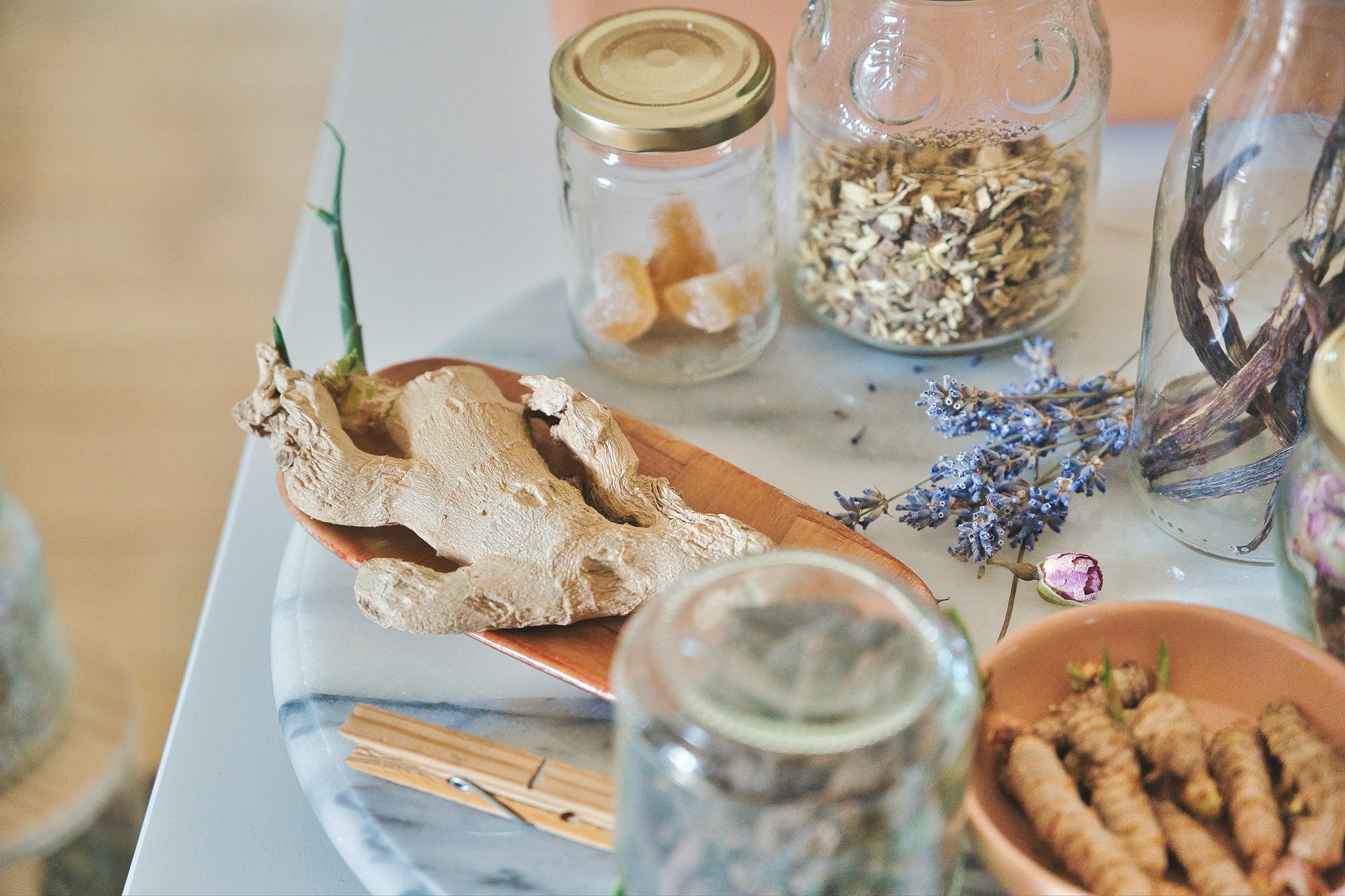
We can use herbs to help us soften the stress that loss and grief can often bring
After a loss, we can feel it everywhere: the tight chest, the clenched jaw, the restless sleep, the fluttering heart, the knot in the stomach, the shoulders that seem permanently lifted toward the ears. Sometimes we are exhausted but cannot seem to settle or get adequate rest. Sometimes we simply need something warm to hold in our hands while the world feels unfamiliar and the days feel raw.
Herbs cannot necessarily take away grief, but some plants have a long history of sitting beside people during difficult seasons or symptoms, gently helping the nervous system soften and the body remember what rest can feel like.
When my mother died, I was absolutely shattered by the loss, and the impact of my grief was so intensely physiological I could barely breathe for weeks. This was when I first really explored herbs as support, and when I discovered the ones I will share with you here, I was astounded by the relief they brought me.
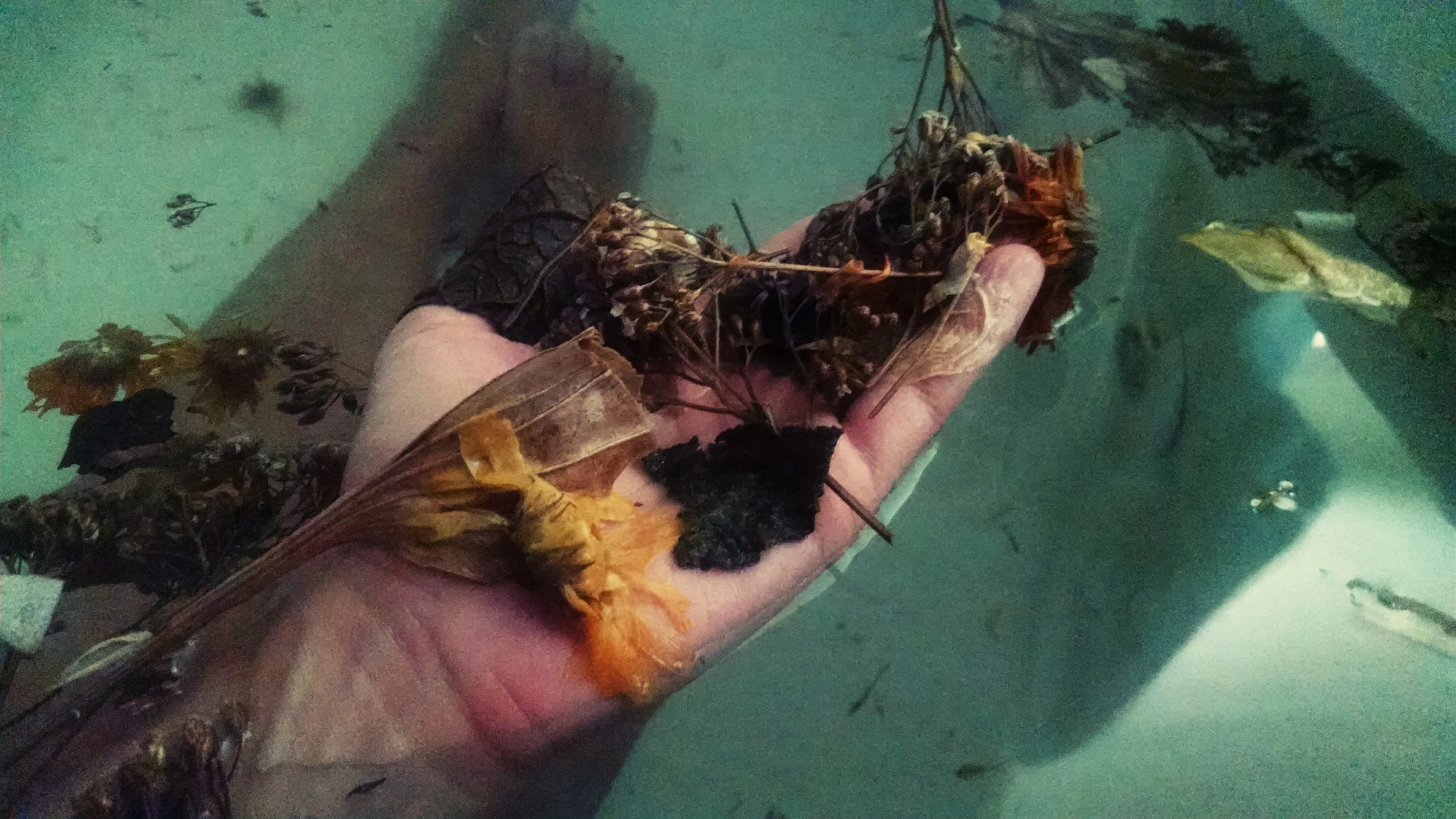
Bathing with herbs, teas can be enjoyed outside the body too!
Here are five of my favorite gentle herbal companions for times of sorrow: motherwort, chamomile, passionflower, lemon balm, and oat straw/milky oats. Then, at the end, we will visit a few stronger muscle-relaxing herbs for those times when grief has settled into the body like a stone.
A small note before we begin: the dosages below are general adult herbalist-style ranges, not individualized medical advice. If you are pregnant or breastfeeding, take prescription medicines, have heart or blood-pressure problems, have an autoimmune condition, are preparing for surgery, or have a significant medical condition, check with a qualified clinician or experienced herbal practitioner before using medicinal doses of herbs.
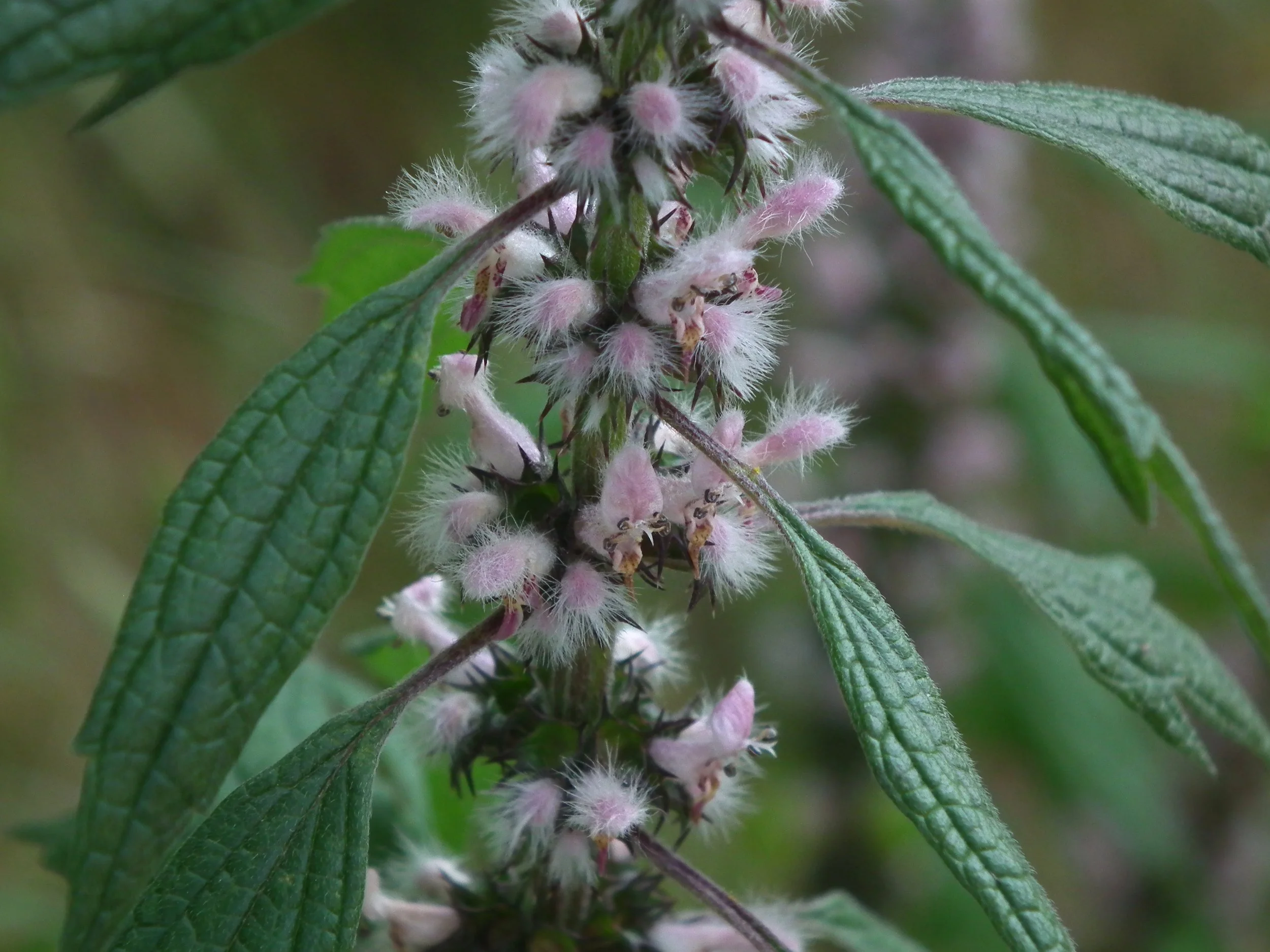
Motherwort ~ the lion-hearted one
Leonurus cardiaca
Motherwort is one of those plants whose name feels like a little story.
Leonurus means “lion's tail,” while cardiaca refers to the heart. Herbalists have traditionally associated motherwort with the heart and with the emotional and physical upheaval that can accompany times of great stress. There is something wonderfully appropriate about calling this plant a lion heart for grief.
Imagine her as an old woman in a garden, broad-skirted and steady, saying, “Yes, dear. I know. Come, sit down and rest here with me for a while.”
Motherwort has traditionally been used for nervous tension and sensations of a pounding or noticeable heartbeat after more serious cardiac causes have been ruled out. The European Medicines Agency recognizes this use based on long-standing traditional use, though it also notes that modern clinical evidence is limited.
For someone grieving, motherwort is especially interesting when the emotional experience has a strong physical component: the gripping, heavy elephant-on-the-chest feeling, along with feeling fluttery, overwhelmed, and agitated, making it hard to settle.
How to use it: Motherwort is quite bitter, so tincture is often easier than tea. A traditional adult tincture dose is about 1–2 mL (20–40 drops), up to three times daily; start at the lower end to see how you respond. I find that starting a tincture with just a drop or two in the mouth can be enough to get the energetic benefits, then increasing by only a few drops at a time to let your body and heart respond without a big dose. If using dried herb as tea, about 1–2 teaspoons per cup, steeped for 10–15 minutes, is a gentle starting point, although many people find the flavor challenging.
I wouldn't casually combine motherwort with heart or blood-pressure medicines without professional guidance. It can also cause what we call in herbal medicine as “uterine letdown” so it’s contraindicated for pregnant bodies and heavy bleeding during menstruation.
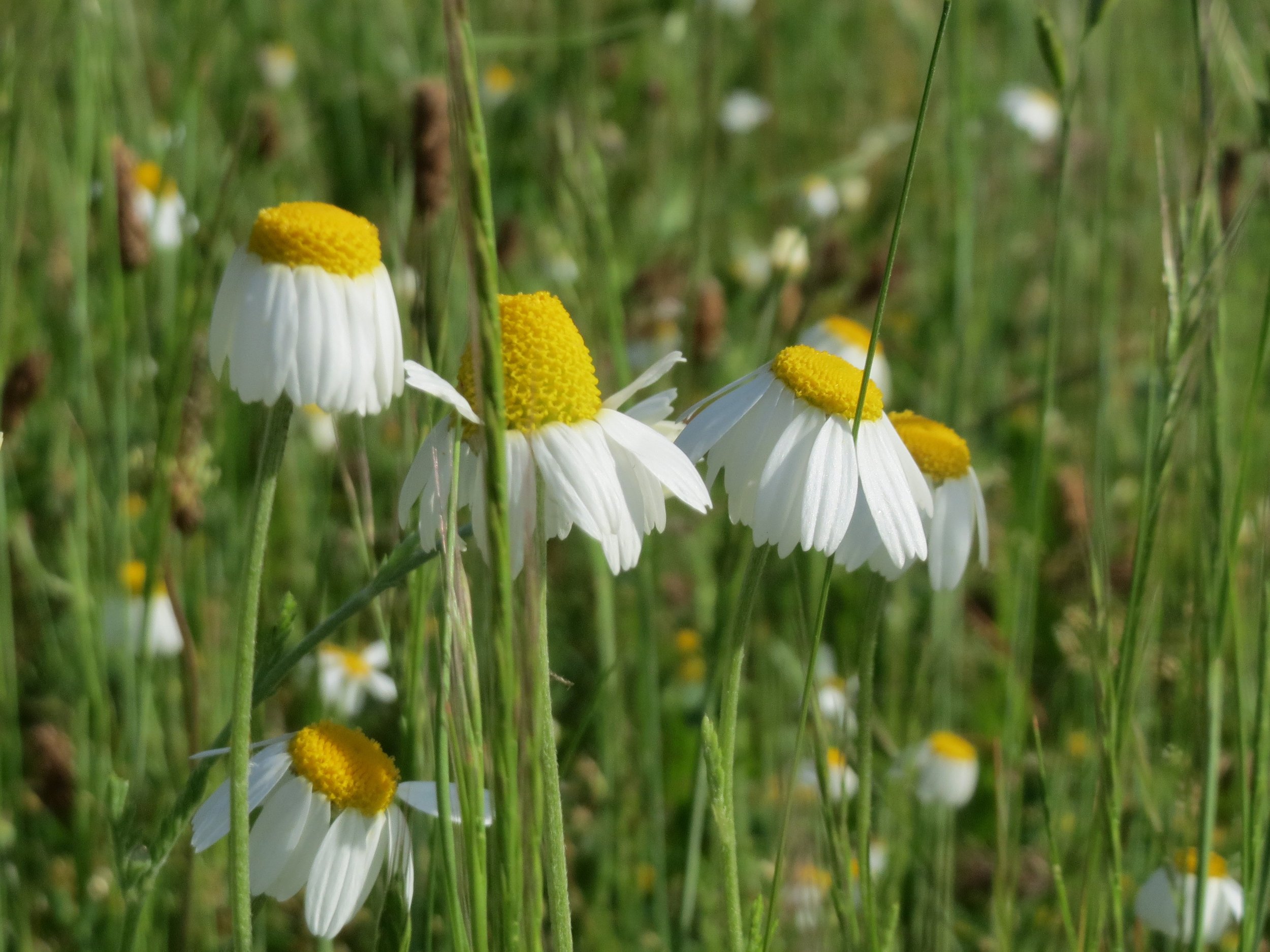
Chamomile ~ a grandmother's warm hands
Matricaria chamomilla / Matricaria recutita
If any herb deserves to be anthropomorphized as a grandmother, it is chamomile.
She is the bright-faced, childlike grandmother with wisdom as deep as the sea, who puts a blanket over your shoulders without you having to ask. She makes tea before you realize you need it. She smells faintly of dried flowers, clean linen, and the garden.
Chamomile has been used medicinally for thousands of years, with records of its use in ancient Egyptian, Greek, Roman, and Chinese traditions.
Modern research has found some evidence that chamomile preparations may help with anxiety, although the evidence is still considered preliminary. Several clinical studies have reported reductions in generalized anxiety symptoms, and chamomile contains constituents such as apigenin that are thought to interact with pathways involved in nervous-system regulation.
For grief, I think of chamomile as the herb of softening.
Tea: Use approximately 1–2 teaspoons of dried chamomile flowers per cup of just-boiled water. Cover and steep for 5–10 minutes. Drink slowly, especially in the evening.
And chamomile doesn't have to stay in the teacup!
It can be beautiful in a warm bath, where the flowers release their gentle scent and vibrations into the water. You can also infuse chamomile into a simple carrier oil and use the resulting oil on the hands, feet, face, or body. There is something deeply comforting about massaging warm chamomile oil into tired shoulders or dry hands.
It is like being wrapped in the arms of a maternal grandmother.
One caution: people who are allergic to ragweed, chrysanthemums, marigolds, daisies, or related plants may be more likely to react to chamomile. Drug interactions, including with warfarin, have also been reported.
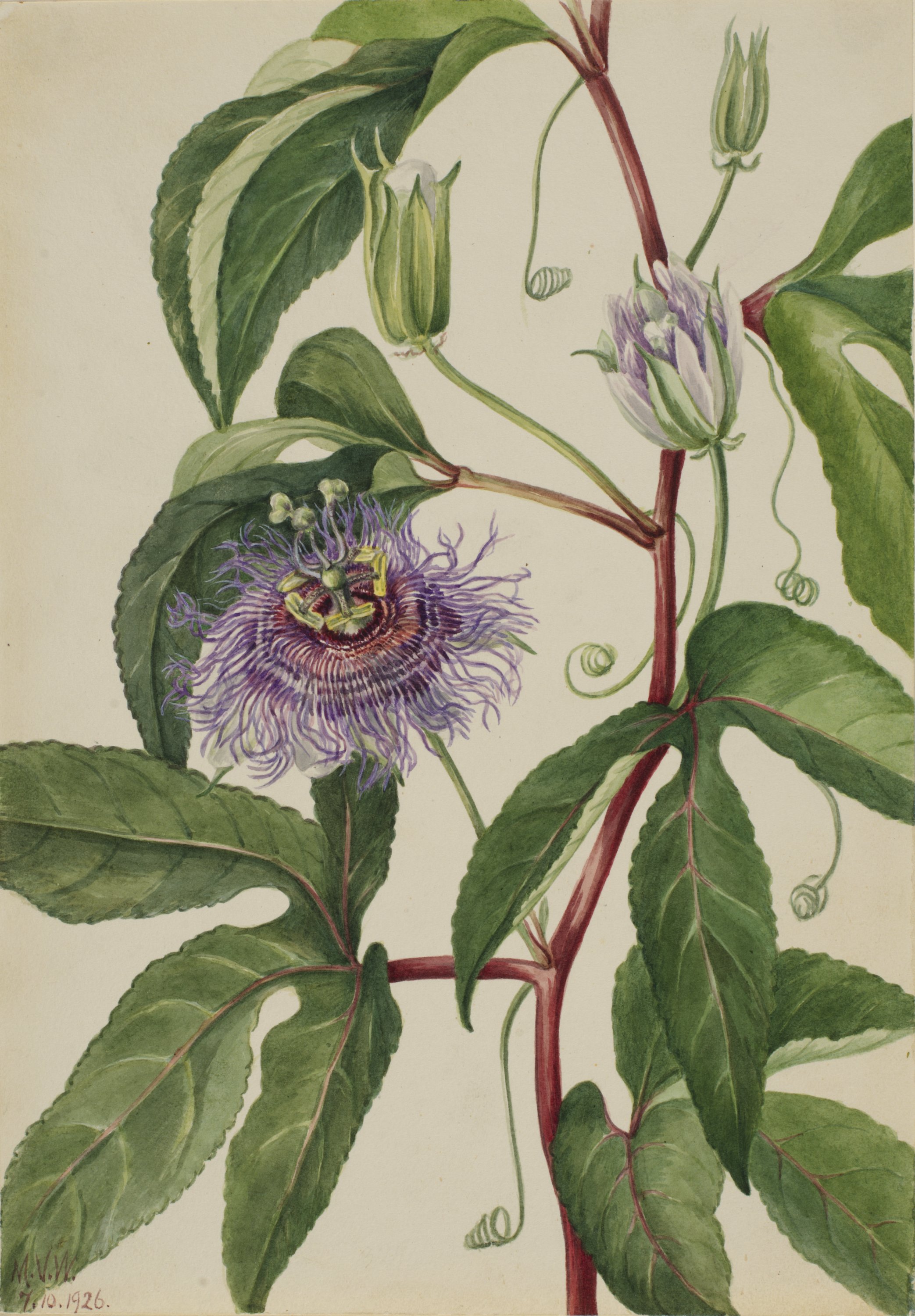
Passionflower ~ the vine that teaches us to unclench our heart
European missionaries named Passiflora in the 16th century, interpreting parts of the flower as symbols of the Passion of Christ, the suffering and crucifixion of Jesus. Image by Mary Vaux Walcott
Passiflora incarnata
Passionflower is a strange and beautiful plant, climbing and twining its way through the world with extraordinary blooming flowers.
Spanish explorers first encountered passionflower in South America and brought it back to Europe. European observers interpreted the flower's unusual structures through Christian symbolism, giving the plant its famous “passion” name, reminiscent of Christ. Indigenous traditions used the plant long before this European interpretation.
Passionflower has traditionally been considered a calming and sedating herb. Modern research is not enormous, but several small clinical studies suggest it may reduce anxiety, and a systematic review found that the majority of included trials reported reductions in anxiety.
I think of passionflower as the plant that sits beside the nervous system and whispers, “Shhh, it’s okay, you don't have to hold everything so tightly.”
It can be particularly lovely when grief comes with mental chatter or difficulty settling at bedtime.
Tea: Approximately 1–2 teaspoons of dried aerial parts per cup, steeped covered for 10–15 minutes, can make a traditional evening tea.
Tincture: A common adult herbalist range is around 1–2 mL in the evening, with some preparations used up to three times daily depending on concentration and the individual.
Passionflower can cause drowsiness, dizziness, or confusion in some people, and it can interact with medicines that depress the nervous system. Do not use it around anesthesia without medical guidance.
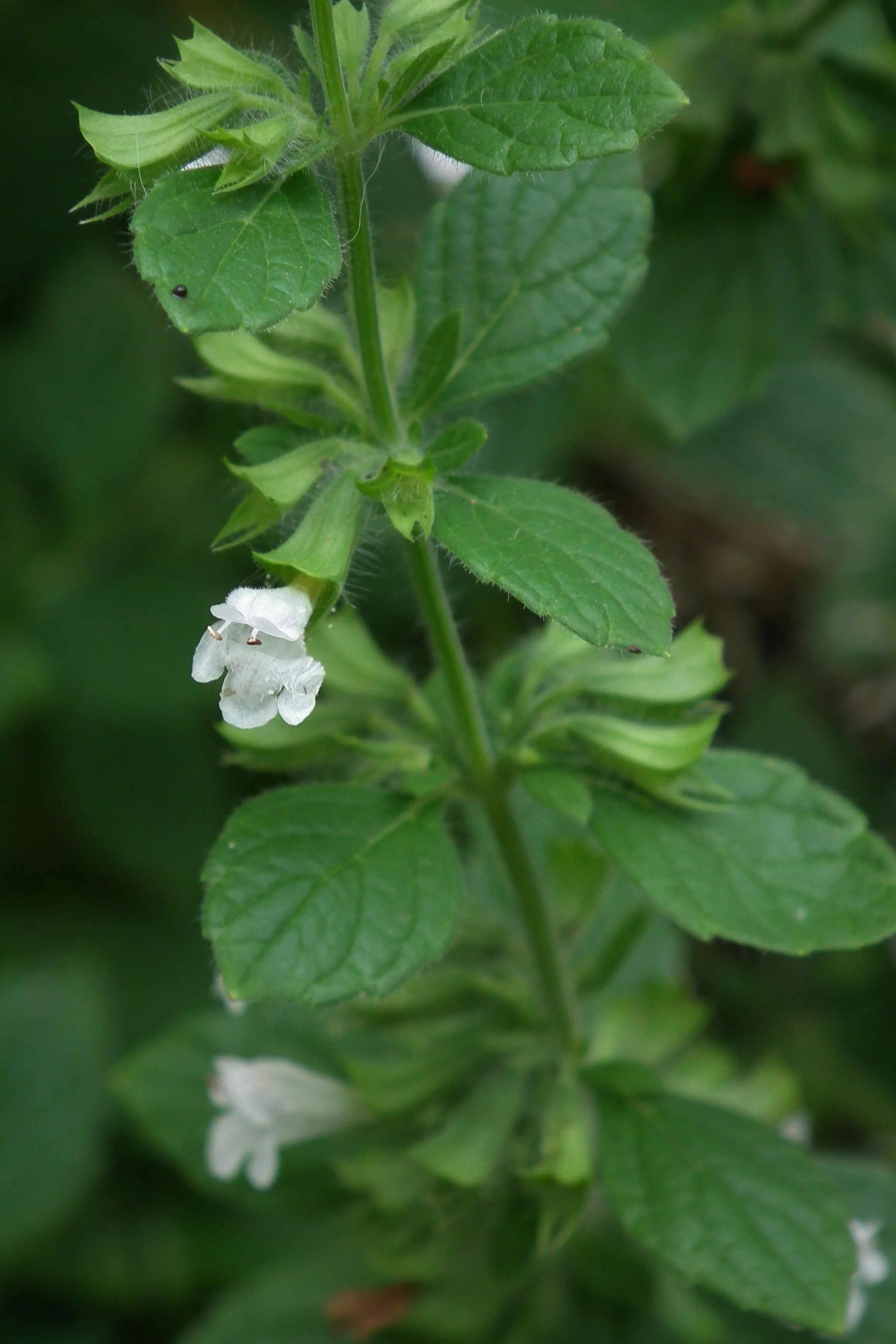
Lemon Balm ~ the sunny friend who comes to the door with gifts
Melissa officinalis
Lemon balm is the friend who arrives with lemons, a loaf of bread, and absolutely no expectation that you need to explain yourself.
She smells bright and green, and she gives of herself generously. Her leaves are soft, her scent is uplifting, and her traditional reputation has long been associated with soothing the nerves and comforting the heart.
The genus name Melissa comes from the Greek word for bee, reflecting the plant's extraordinary attraction to bees. For centuries, people have grown it in cottage gardens and used it as a gentle household herb.
Modern research is also interesting: a systematic review and meta-analysis of clinical trials found that lemon balm preparations were associated with improvements in anxiety and depressive symptom scores, though the authors also emphasized the limitations of the available research.
For grief, lemon balm can be especially lovely when sadness comes with nervous exhaustion, digestive upset, flare-ups of herpes outbreaks(common with stress), or an inability to settle.
Tea: Try 1–2 teaspoons of dried lemon balm per cup, steeped for 5–10 minutes. It makes a particularly pleasant tea blended with chamomile or oat straw.
Tincture: Approximately 1–2 mL up to three times daily is a commonly used adult herbal range, depending on the preparation's strength.
Lemon balm is one of the herbs I happily keep in the kitchen and the herbal medicine cabinet.
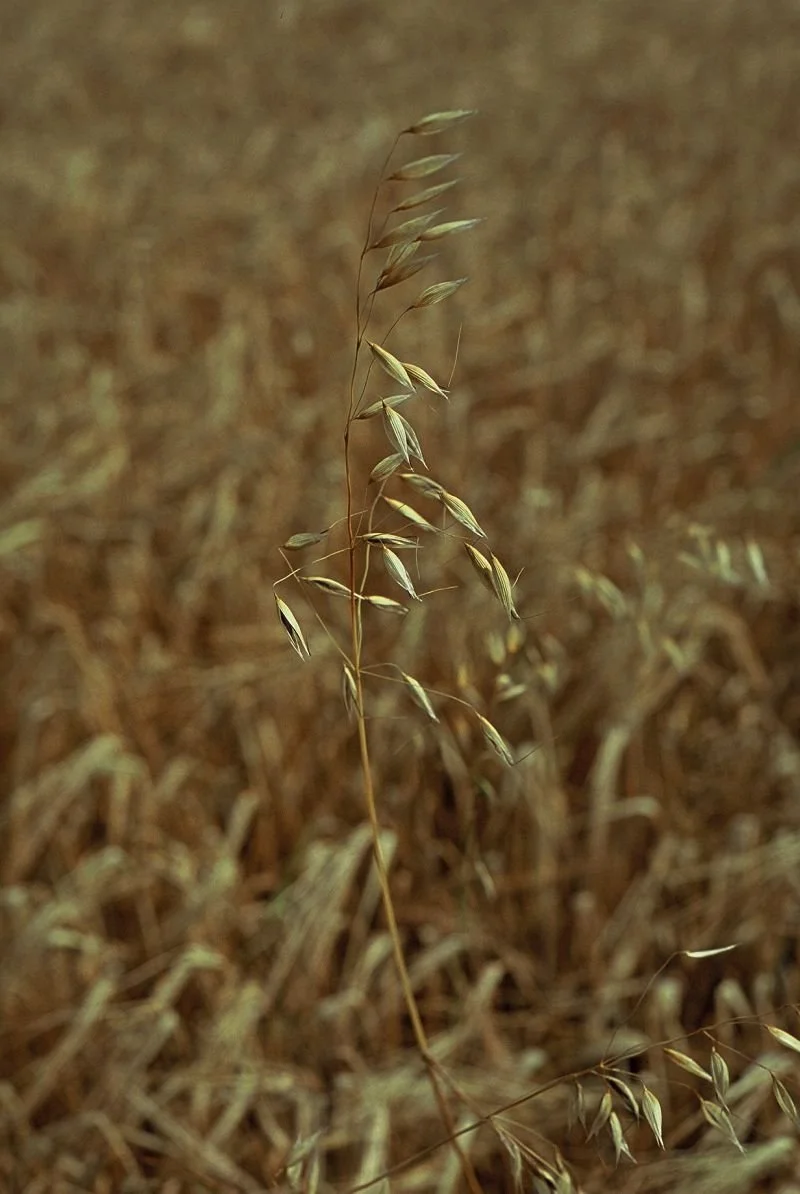
Oat Straw ~ the quiet nourishment of the meadow
Nourishing and gentle, oat is a friend to the nervous system as an herb and a food
Avena sativa
If motherwort is the lion-hearted auntie and chamomile is strong granny, oat is the quiet friend who brings soup and sits beside you without needing conversation.
Oat straw, made from the green aerial parts of the plant, is a traditional nourishing nervine, offering gentle support for tired, worn-out nerves. Milky oats, harvested fresh when the young oat tops are still filled with their milky sap, are traditionally used as a deeper tonic during times of prolonged stress, grief, and emotional exhaustion.
The research is still limited, so much of our knowledge comes from generations of herbal use.
Tea: 2–4 teaspoons dried oat straw per cup, steeped 10–15 minutes. Sip throughout the day.
Milky oat tincture: ½ teaspoon (2–3 mL) once or twice daily. Take it straight or add it to water or tea.
Oat is gentle, nourishing, and comforting, more like a bowl of warm porridge for the nervous system than a sleeping pill.
And then there is the body...
Our brain is our body, so it is important to support both mind and body when you’ve experienced major loss
Sometimes grief doesn't just make us emotionally tense. It makes our muscles tense too.
We hold ourselves up when inside we are curled up: tensed shoulders, clenched hands, tightened jaw, walking around trying to act normal and composed, yet we just need to curl inward. We sleep badly, and the next morning everything hurts.
Herbalists traditionally use a few herbs when physical tension becomes the main complaint, and I've found that a gentle combination of nervine herbs and muscle-relaxation support can really take the edge off and help our body and brain rest enough while we go through the adjustment that loss brings.
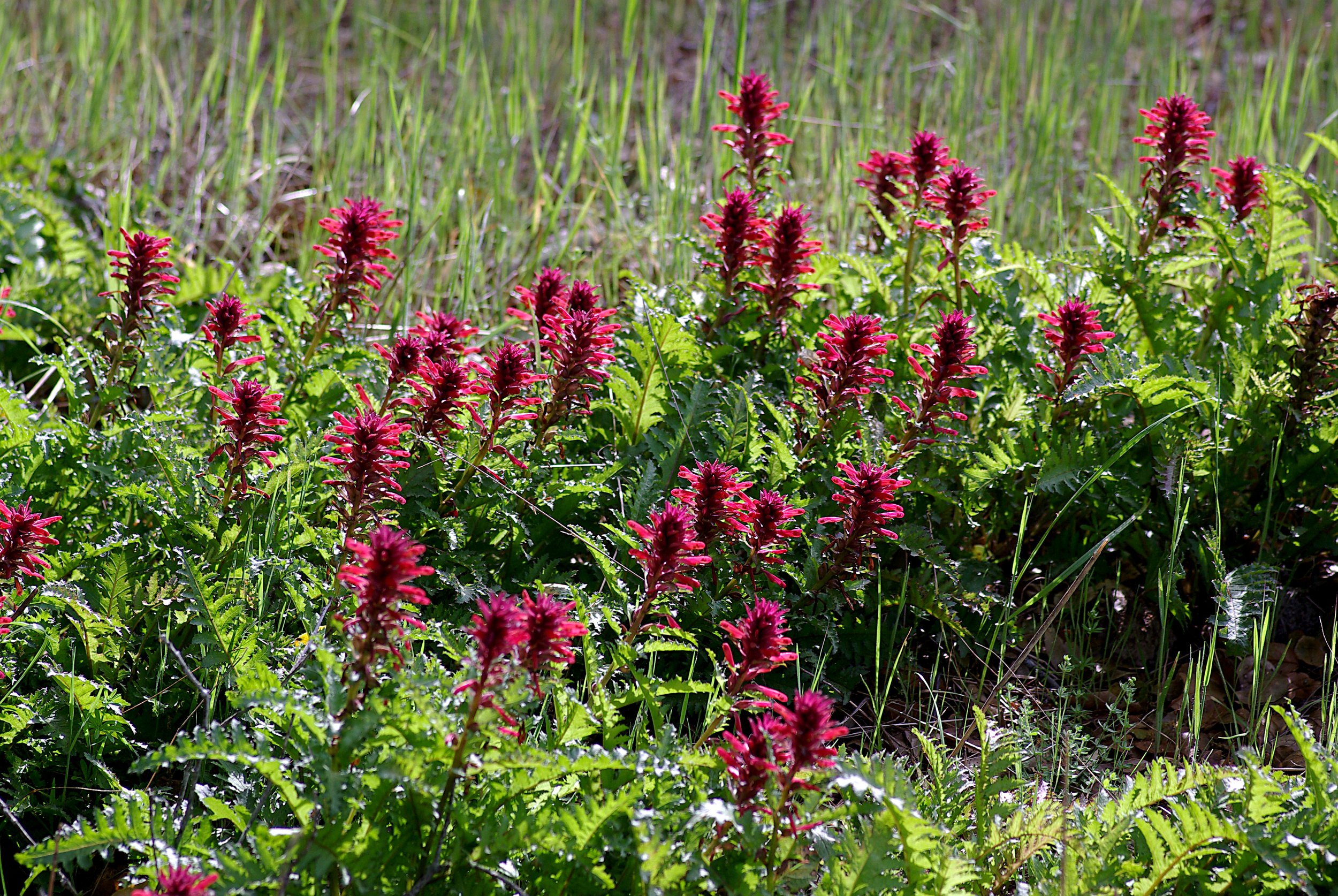
Indian Warrior ~ wild and strong
Photo by Alan Schmeirer
Pedicularis spp.
Indian warrior is a name used in Western herbalism for species of Pedicularis, including Pedicularis bracteosa or densiflorum. Herbalists regard these plants as powerful muscle-relaxing and antispasmodic herbs, particularly for muscular tension and pain.
This is one of those plants where traditional herbal knowledge is considerably stronger than the clinical research. It is not an herb I would recommend as a casual kitchen tea for someone new to herbal medicine, as it can be overdosed and cause uncomfortable levels of muscle relaxation (i.e., you are like a limp noodle).
Herbalists generally use Pedicularis as a tincture, often in small amounts, and usually as part of a more individualized formula.
Because species, preparations, and strengths vary substantially, I would not give a universal home dosage for Indian warrior. This is one for an experienced herbalist, particularly if someone is taking medications or has a medical condition.
Think of her as the tough and wild mountain healer in the background saying, “All right. Let those shoulders come down now.”

Devil’s Claw ~ for the achy body
Devil’s Claw Photo by Bonolo Nikita Rankaga
Harpagophytum procumbens
Devil’s claw comes from the dry landscapes of southern Africa, where its unusual hooked fruits gave it its wonderfully dramatic name. Traditionally, people have used the root for aches, stiffness, and inflammatory pain.
Think of devil’s claw as the old herbalist who notices your sore shoulders and says, “Let’s tend to the body, too.” Its best-known modern use is for musculoskeletal pain and joint discomfort, with research suggesting that its compounds, particularly harpagoside, may have anti-inflammatory and pain-relieving effects.
How to use it: Devil’s claw is most often taken as a capsule, extract, or tincture rather than as a relaxing tea. Follow the preparation’s label dosage, since concentrations vary considerably.
It may not directly relax a clenched muscle, but when the body is sore and inflamed, easing that discomfort can make it a little easier to rest.
Avoid devil’s claw with certain medications, particularly blood thinners and some medicines for diabetes or heart conditions, and check with a healthcare professional if you have gallstones or stomach ulcers.
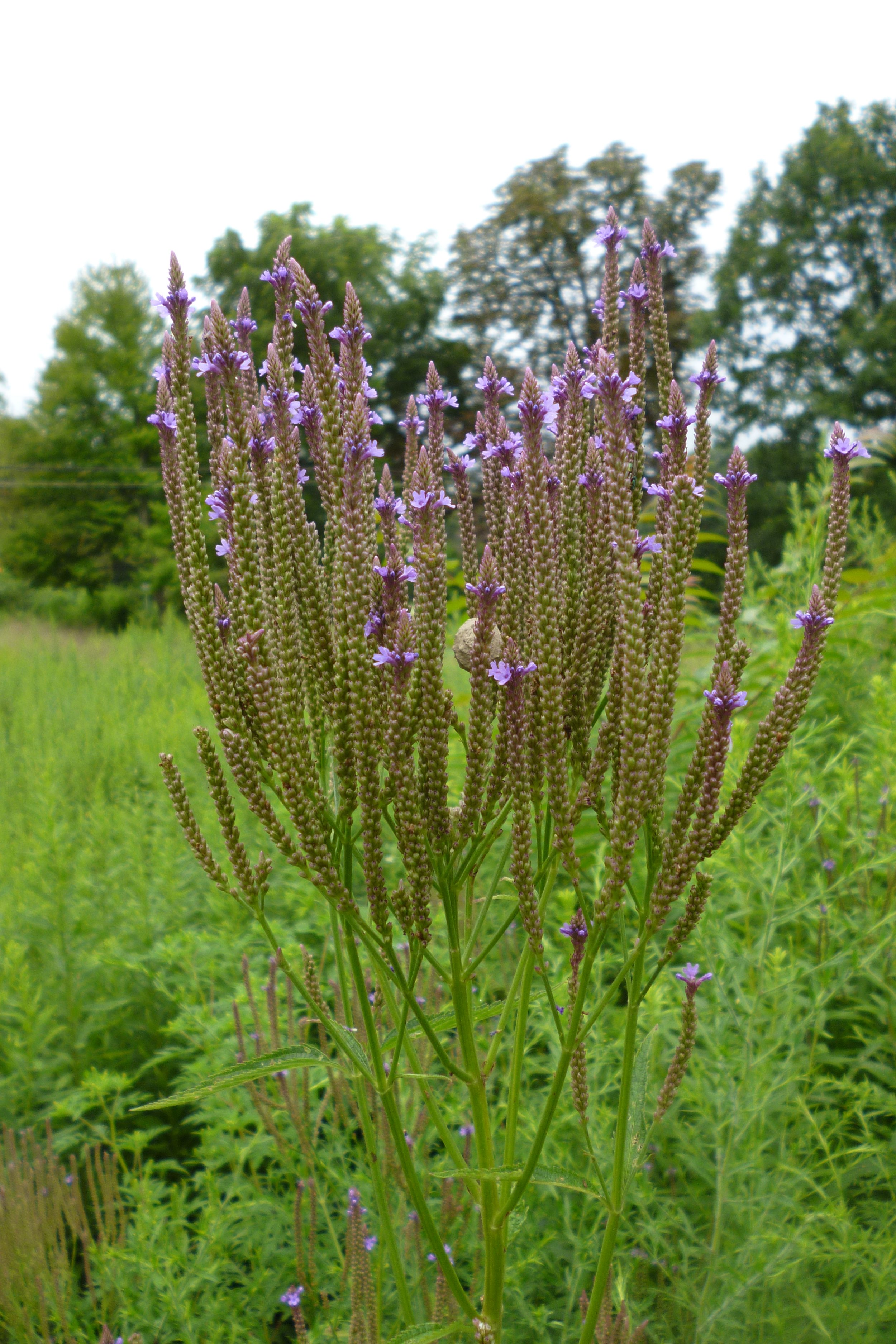
Even the way blue vervain grows mimics the area of the body which we can see relax with it’s assistance
Blue Vervain ~ for the person who holds everything in the upper body
Verbena hastata
Blue vervain is a North American plant of wet meadows and stream edges, sometimes called swamp vervain or simpler's joy.
It has a wonderful reputation in traditional herbalism for people who carry tension in the muscles, especially when emotional stress translates directly into a tight neck, shoulders, jaw, or upper back.
Blue vervain is bitter, remarkably bitter, and that bitterness is part of its traditional herbal personality. She is not the grandmother with the cookie tin, oh no, she is the stern auntie who looks you directly in the eye and says, “Enough. You cannot carry everyone.”
Historically, Verbena hastata has been used for cramps, headaches, fevers, and other complaints, although quality human clinical evidence for its modern uses remains limited. Large amounts can cause gastrointestinal upset, including vomiting and diarrhea.
Tea: Start gently with around 1 teaspoon of dried herb per cup, steeped for 10 minutes. It often blends better with nicer-tasting herbs such as lemon balm or chamomile.
Tincture: Traditional herbal preparations commonly use about 1–2 mL per dose, although tincture concentration varies considerably.
Avoid blue vervain during pregnancy, and use caution with blood-pressure or hormonal medications. Always consult a professional if you are unsure.
A simple grief tea
You do not need to make an elaborate herbal formula.
For a gentle evening cup, try:
1 teaspoon chamomile
1 teaspoon lemon balm
1 teaspoon oat straw
½ teaspoon passionflower
Pour 10–12 ounces of just-boiled water over the herbs. Cover the cup so the aromatic compounds do not escape into the kitchen. Let it steep for 10 minutes.
Strain. Add honey if you like.
Then sit somewhere comfortable and sip it slowly. The ritual itself can matter greatly, as it can become a way to intentionally tend to your body, heart, and mind.
There is something quietly healing about boiling water, choosing the plants, watching the steam rise, wrapping your hands around a warm mug, and giving yourself ten minutes in which you are not required to accomplish anything.
Grief needs room.
Sometimes the most useful thing an herb can do is not make the grief disappear, but help the body soften enough to make room for it to take up more space.
And perhaps that is what these plants have been doing for humans for a very long time: not taking away our sorrow, but sitting beside us while we learn how to carry it.
If this helped you or you’d like to learn more, you’re welcome to explore more resources on nervous system regulation, grief, emotional processing, and the mind-body connection, or reach out to learn more about working together here.

About the Author
Dani Crowell is a nervous system coach and grief specialist with 15 years of experience working with nervous system regulation, somatic approaches, and emotional processing therapies.
Her work helps people understand the connection between the nervous system, emotions, the body, and lived experience, building greater capacity for regulation, integration, and meaningful change.